
Introduction
In today’s competitive industrial landscape, supply chain efficiency has become a critical factor in business success. Manufacturers must deliver high-quality products within shorter lead times while managing raw material costs, production schedules, labour requirements, and increasingly complex customer demands. At the same time, global supply chains face challenges such as transportation disruptions, fluctuating material prices, labour shortages, and changing market conditions.
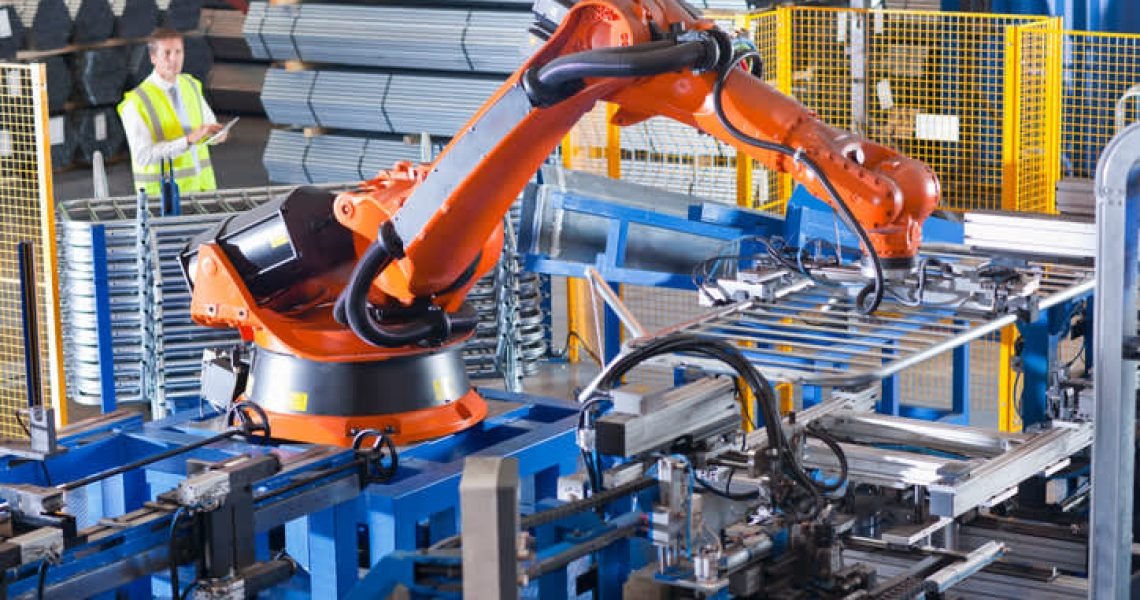
To address these challenges, businesses are increasingly adopting advanced manufacturing technologies, including Computer Numerical Control (CNC) machining, automated production systems, robotics, artificial intelligence (AI), the Industrial Internet of Things (IIoT), and digital twin technology. These innovations are transforming traditional manufacturing processes by improving production accuracy, reducing material waste, enhancing inventory management, and enabling faster communication between suppliers, manufacturers, and customers.
For the metal fabrication industry, these technologies are particularly important. Processes such as laser cutting, CNC bending, precision machining, metal forming, and welding require careful coordination to ensure that materials move efficiently from design and production to final delivery.
As a Malaysian metal fabrication and manufacturing company, Lux Metal recognises the importance of modern manufacturing capabilities in supporting industrial projects and meeting customer requirements. In this article, we explore how advanced manufacturing technologies improve supply chain efficiency, reduce operational costs, strengthen production planning, and support more sustainable manufacturing practices.
1. Understanding Advanced Manufacturing Technologies
Advanced manufacturing refers to the use of modern equipment, software, automation, and data-driven processes to improve how products are designed, manufactured, inspected, and delivered.
Unlike traditional manufacturing methods that depend heavily on manual operations and separate production systems, advanced manufacturing connects different stages of production through integrated technologies.
Common examples include:
- CNC machining: Computer-controlled cutting, milling, turning, and drilling for accurate component manufacturing.
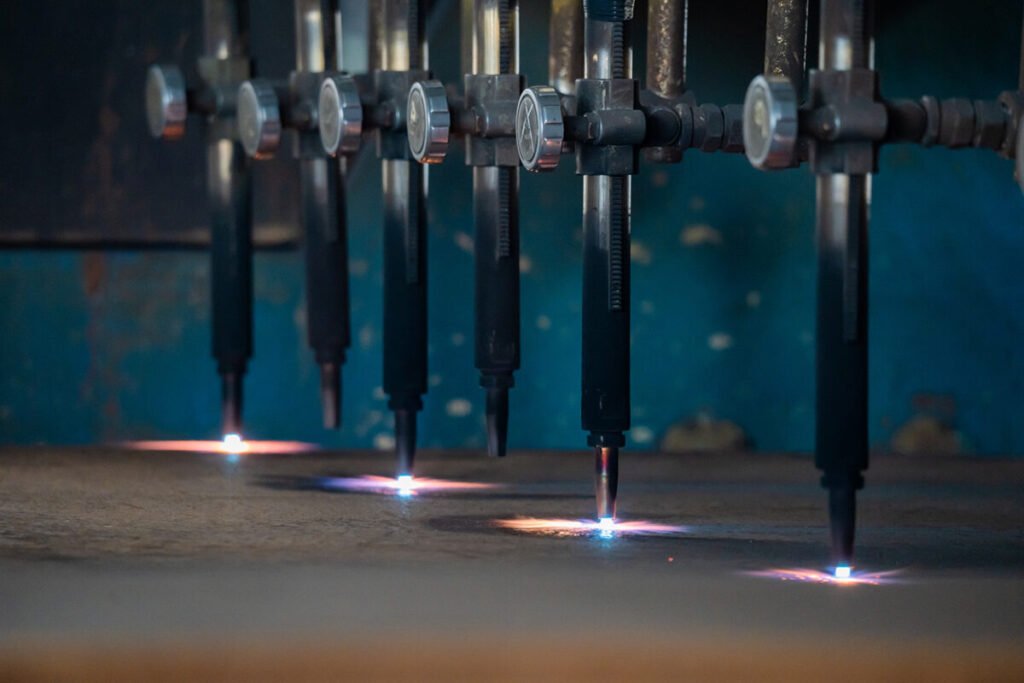
- Laser cutting technology: High-precision cutting of metal sheets and components according to digital designs.
- Automated manufacturing systems: Equipment and robotics that perform repetitive production tasks with consistent results.
- Artificial intelligence and machine learning: Software that analyses production data to improve forecasting, scheduling, and operational decisions.
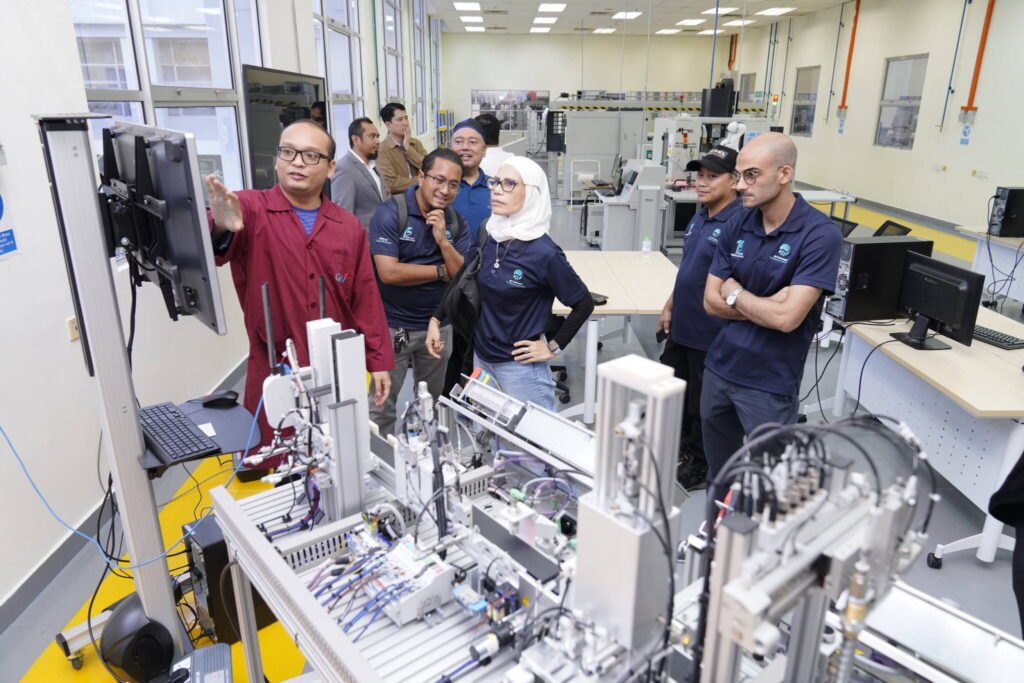
- Industrial Internet of Things (IIoT): Connected sensors and equipment that provide real-time information about machinery and production activities.
- Digital twin technology: Virtual representations of physical equipment, processes, or production systems that support monitoring, simulation, and optimization.
These technologies help manufacturers move towards a more connected production environment, often associated with Industry 4.0 and smart manufacturing.
According to the US National Institute of Standards and Technology (NIST), digital twins can help manufacturers monitor, diagnose, predict, and optimize manufacturing operations. When implemented effectively, these technologies can support better production planning, equipment management, and cost control.
2. How CNC Machining Improves Production Efficiency
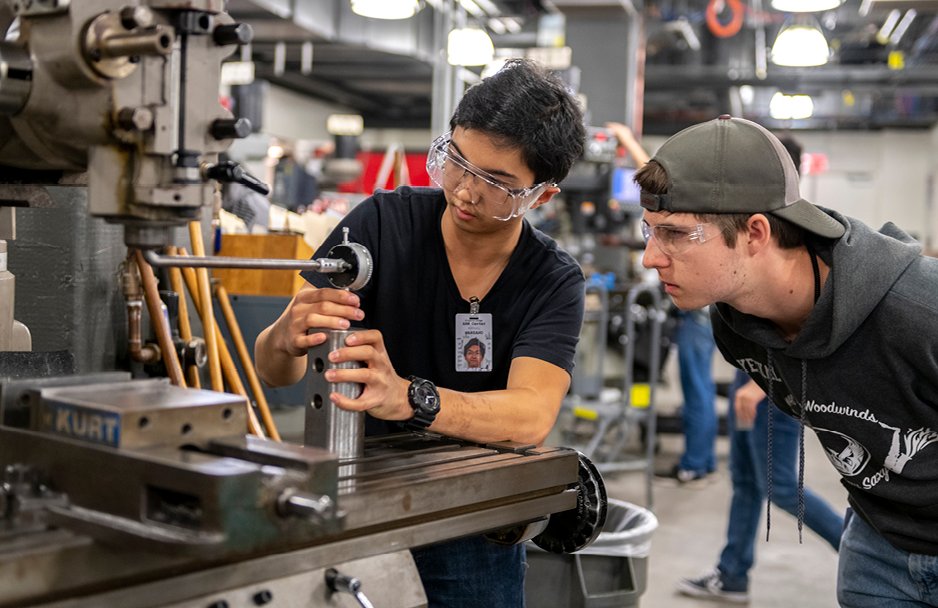
Computer Numerical Control (CNC) machining is one of the most important technologies in modern manufacturing. It uses computer-generated instructions to control machine tools, enabling manufacturers to produce components according to defined dimensions, shapes, and tolerances.
CNC milling, turning, drilling, and other precision machining processes are widely used in industries that require accurate and repeatable components.
Improving manufacturing accuracy
In traditional manual machining, the quality of a component may depend heavily on operator technique, experience, and working conditions. CNC machining reduces this dependency by following programmed instructions and established production parameters.
This improves repeatability across production runs and helps reduce dimensional variation, rework, and rejected components.
For manufacturers producing metal brackets, machined parts, mounting components, or custom industrial products, consistent accuracy is important because errors in one component can delay assembly and disrupt the entire production schedule.
Reducing production lead times
CNC machines can perform complex operations efficiently once the design, tooling, and program have been properly prepared. Automated movements and repeatable machining cycles reduce the need for constant manual intervention.
Manufacturers can also use digital design files to prepare production programs more efficiently, particularly when producing repeat orders or similar components.
Shorter manufacturing lead times help businesses respond to customer orders more quickly and coordinate delivery schedules with downstream assembly and installation activities.
Supporting flexible production
Modern supply chains must accommodate both high-volume production and smaller batches of customized products. CNC machining allows manufacturers to change programs and tooling arrangements to suit different component designs.
This flexibility is particularly valuable for custom metal fabrication, where customers may require different dimensions, material specifications, surface finishes, or product configurations.
By improving accuracy and production flexibility, CNC machining helps manufacturers maintain consistent output while responding to changing market requirements.
3. Automation and Robotics Reduce Production Bottlenecks
Production bottlenecks occur when one stage of manufacturing cannot keep pace with the others. For example, a laser cutting machine may complete components quickly, but manual material handling, bending, welding, or inspection may delay the next stage.
Automation and robotics can help address these challenges by improving the flow of materials and reducing repetitive manual tasks.
Automated material handling
Automated handling systems can move materials and components between designated production areas. Depending on the facility, these systems may include conveyors, robotic arms, automated guided vehicles, or lifting and positioning equipment.
When integrated with production planning, automated material handling can reduce unnecessary movement, improve workplace organization, and help ensure that the next manufacturing process receives the required components on time.
Robotic welding and repetitive operations
Robotic welding and automated production equipment can perform repetitive tasks with consistent programmed movements. This can help manufacturers improve throughput and reduce variation in suitable applications.
Automation does not eliminate the need for skilled workers. Instead, it allows employees to focus more on programming, quality inspection, troubleshooting, process improvement, and other activities requiring technical judgment.
Better coordination between processes
The greatest benefit of automation often comes from integrating multiple production stages rather than improving a single machine in isolation.
For example, a metal fabrication workflow may involve laser cutting, CNC bending, welding, polishing, surface treatment, and final inspection. Coordinating these activities helps prevent work-in-progress from accumulating between departments.
A well-planned production flow can improve delivery reliability, reduce handling costs, and make better use of manufacturing capacity.
4. Artificial Intelligence Improves Demand Forecasting and Production Planning
Demand forecasting is an essential part of supply chain management. Manufacturers need to estimate future customer demand to determine how much raw material to purchase, how many production hours to schedule, and when finished products should be delivered.
Traditional forecasting methods may rely heavily on historical sales, spreadsheets, and manual estimates. Although these methods remain useful, artificial intelligence and machine learning can provide additional analytical capabilities.
More informed demand forecasting
AI-based systems can analyse historical orders, seasonal patterns, customer purchasing behaviour, production records, and other relevant data to identify trends.
For example, a metal fabrication company may notice increased demand for particular metal components during certain construction or industrial project cycles. Better forecasting can help the company prepare material purchases and production capacity before orders reach their peak.
Forecasting remains subject to uncertainty, so AI predictions should support rather than replace human judgment.
Optimizing production schedules
AI-supported planning tools can help manufacturers allocate machines, labour, and production time according to order priorities and resource availability.
If one machine is overloaded while another has available capacity, scheduling software may help identify alternative production sequences. This can reduce bottlenecks and improve overall equipment utilization.
Responding to supply chain disruptions
When raw materials arrive late or urgent orders are introduced, production schedules may need to change quickly.
Data-driven planning tools can help businesses assess which orders will be affected, identify available resources, and evaluate alternative schedules. This improves operational responsiveness and reduces the risk of delays spreading throughout the supply chain.
5. Industrial IoT Enhances Real-Time Supply Chain Visibility
Supply chain visibility refers to the ability to understand the status, location, and progress of materials, orders, and products as they move through procurement, manufacturing, storage, and delivery.
A lack of visibility can cause avoidable problems. Production teams may not know whether materials have arrived, purchasing departments may order stock that is already available, and customer service teams may struggle to provide accurate delivery updates.
The Industrial Internet of Things (IIoT) helps address these issues by connecting industrial equipment, sensors, and digital systems.
Monitoring machinery performance
Sensors can collect information about machine operating conditions, temperatures, vibration, energy use, and production activity. Depending on the equipment and system, this information can help operators identify abnormal conditions or investigate performance issues.
Better machine monitoring can support preventive maintenance and reduce unexpected production interruptions.
Tracking materials and work-in-progress
Barcode systems, RFID tags, and digital production records can help businesses track materials as they move between departments.
For example, a custom metal component can be recorded when it enters laser cutting, moves to bending, proceeds to welding, and reaches final inspection. This gives production planners a clearer view of work-in-progress and helps them identify where orders are being delayed.
Improving communication with customers
More reliable production information enables manufacturers to provide better order-status updates and more realistic delivery estimates.
For customers managing construction, engineering, or industrial projects, accurate delivery information is valuable because late components can affect installation schedules and project completion.
6. Digital Twin Technology Supports Smarter Manufacturing Decisions
A digital twin is a virtual representation of a physical product, machine, production line, or broader operational system. It can combine engineering models, operational data, simulations, and sensor information to help manufacturers understand how a system behaves.
Digital twin technology is becoming an important area of advanced manufacturing because it allows businesses to evaluate possible changes before implementing them in a physical production environment.
Simulating production processes
Manufacturers can use digital models to evaluate different production sequences, machine layouts, resource allocations, or operating conditions.
For example, a manufacturer considering a new arrangement for its laser cutting and bending departments could simulate material movement to identify potential congestion before physically relocating equipment.
Identifying potential bottlenecks
By comparing production data with expected performance, digital twin systems can help identify stages where delays, equipment constraints, or resource shortages may occur.
This supports more informed decisions about scheduling, maintenance, and production capacity.
Strengthening supply chain resilience
Digital twins can also be used to explore different supply chain scenarios. Businesses may assess how a delayed material shipment, equipment breakdown, or sudden increase in demand could affect production and delivery.
NIST’s research into digital twins for advanced manufacturing highlights the importance of reliable data, interoperability, and validation. These considerations matter because digital models are only useful when their underlying information accurately represents the real system.
7. Advanced Manufacturing Technologies Help Reduce Inventory Costs
Inventory management is a balancing act. Holding too much stock increases storage costs and ties up working capital, while holding too little can result in production stoppages and missed delivery deadlines.
Advanced manufacturing technologies help companies make inventory decisions based on better information.
Real-time inventory monitoring
Integrated inventory systems can track raw materials, components, work-in-progress, and finished goods. When connected to purchasing and production records, they help teams understand which materials are available and which need replenishment.
This reduces dependence on manual stock checks and helps identify discrepancies earlier.
More accurate material planning
Digital production schedules can be linked with material requirements to estimate when and how much stock will be needed.
For metal fabrication companies, this is particularly useful when managing different sheet thicknesses, metal grades, bar sizes, tubes, and other material specifications.
Better material planning can reduce excess inventory while helping ensure that essential materials are available when production begins.
Balancing just-in-time production with resilience
Just-in-time manufacturing aims to make materials available when they are needed, reducing unnecessary inventory and storage requirements.
However, relying on minimal stock can expose manufacturers to supply disruptions, long supplier lead times, and sudden price increases.
A more resilient strategy combines efficient inventory management with appropriate safety stock for critical materials. Advanced planning systems can help businesses determine where lean inventory practices are suitable and where additional stock is necessary to protect production continuity.
8. Data Integration Connects Suppliers, Manufacturers, and Customers
One of the biggest challenges in supply chain management is fragmented information. Purchasing, engineering, production, quality control, warehousing, and sales departments may each maintain separate records.
When information is inconsistent, companies can experience duplicate data entry, outdated drawings, incorrect material orders, and communication delays.
Digital integration helps create a more coordinated manufacturing environment.
Connecting design and production
Computer-Aided Design (CAD) software allows engineers to create digital product drawings and models, while Computer-Aided Manufacturing (CAM) software helps translate suitable designs into machine instructions and production processes.
When engineering changes are managed properly, updated drawings and specifications can be communicated to production teams without relying entirely on manual document distribution.
This is particularly important in custom metal fabrication, where even a small design change can affect cutting dimensions, bending allowances, hole positions, or assembly requirements.
Integrating procurement and manufacturing
When purchasing systems share information with production schedules, procurement teams can make better decisions about order quantities and delivery timing.
This can reduce unnecessary urgent purchases and help suppliers understand upcoming material requirements.
Improving traceability and quality records
Digital quality records can link inspection results, material information, production stages, and customer orders. This improves traceability and makes it easier to investigate defects or resolve specification questions.
Effective integration requires consistent data standards, clear responsibilities, and appropriate access controls. Simply installing multiple software systems will not automatically create an efficient supply chain if the systems cannot communicate with one another.
9. Quality Control Technology Reduces Rework and Delivery Delays
Product quality is directly connected to supply chain efficiency. When components fail inspection, manufacturers may need to repeat production, order replacement materials, reorganize machine schedules, and delay delivery.
Advanced quality control technologies help detect problems earlier and reduce the cost of poor quality.
Precision inspection and measurement
Modern inspection equipment, including coordinate measuring machines, laser measurement systems, and digital inspection tools, can verify dimensions and product characteristics against defined specifications.
The appropriate method depends on the component geometry, material, tolerance requirements, and applicable industry standards.
In-process monitoring
Monitoring production parameters during manufacturing can help operators identify deviations before a large batch of defective components is produced.
For example, checking dimensions during a production run may reveal tool wear, incorrect settings, or material variation. Corrective action can then be taken before the problem affects additional components.
Reducing rework and scrap
Consistent production processes, appropriate inspection procedures, and effective corrective action can reduce material waste and repeated manufacturing operations.
This improves machine availability and allows production capacity to be used for new orders instead of correcting avoidable errors.
For customers, the result can be more reliable quality, fewer delivery disruptions, and greater confidence in the supplier’s manufacturing capabilities.
10. Sustainable Manufacturing Improves Resource and Supply Chain Efficiency
Sustainability is becoming an increasingly important consideration for manufacturers. Customers and industrial project owners are paying closer attention to material efficiency, energy consumption, waste management, and the environmental impact of production.
Advanced manufacturing technologies can support these objectives while helping businesses control costs.
Reducing metal waste
Precision laser cutting and optimized nesting software can arrange components on metal sheets to improve material utilization. By planning cutting layouts more effectively, manufacturers can reduce offcuts and make better use of purchased materials.
Scrap metal can also be segregated and sent for recycling where suitable recovery arrangements are available.
Improving energy management
Monitoring electricity consumption and machine operating patterns can help identify inefficient production activities.
Manufacturers may use this information to improve equipment scheduling, reduce unnecessary idle time, and evaluate more energy-efficient technologies.
Supporting more efficient production
Accurate programming, better process control, and reduced rework can lower the amount of material and energy required to produce acceptable components.
Sustainable manufacturing therefore involves more than adopting environmentally friendly equipment. It also requires effective production planning, resource management, maintenance, and continuous improvement.
11. Challenges in Adopting Advanced Manufacturing Technologies
Although advanced manufacturing offers significant opportunities, implementation requires careful planning. Businesses should consider several practical challenges before investing in new systems.
Initial investment: CNC equipment, automation, sensors, and integrated software can require substantial capital. Companies should evaluate expected benefits, operating costs, and long-term business needs before committing to an investment.
Workforce skills: Employees need suitable training to operate equipment, interpret production data, maintain systems, and troubleshoot problems. Technology investment should be supported by skills development.
System integration: Older machinery and existing software may not connect easily with newer systems. Manufacturers should assess compatibility and prioritize integration where it offers clear operational benefits.
Cybersecurity: Connected equipment and digital records create additional security considerations. Access controls, backups, software updates, and employee awareness can help protect production systems and sensitive business information.
Change management: New technology may require changes to established workflows and responsibilities. Clear communication and employee involvement can help ensure that new systems are adopted effectively.
For small and medium-sized manufacturers, a phased approach is often practical. Starting with a clearly defined problem—such as material tracking, machine downtime, production scheduling, or inspection records—allows businesses to evaluate results before expanding their investment.
12. How Lux Metal Supports Modern Manufacturing Needs
As industrial supply chains become more demanding, businesses need manufacturing partners that understand the importance of precision, dependable production processes, and coordination between different fabrication stages.
Lux Metal is a Malaysian metal manufacturing and fabrication company serving project and industrial requirements through a range of custom metalworking capabilities.
Our manufacturing services include:
- CNC laser cutting: Producing accurately cut metal components based on specified designs and dimensions.
- CNC bending and metal forming: Shaping sheet metal and other suitable workpieces to meet project requirements.
- V-grooving and metal finishing: Supporting the production of components that require defined folds, clean edges, and selected surface finishes.
- Tube laser cutting: Processing suitable tubular profiles for applications requiring accurate cuts and complex geometries.
- CNC machining, milling, and turning: Supporting the manufacture of precision components and machined parts.
- Welding and metal fabrication: Combining metal components into custom assemblies and fabricated products.
- Waterjet and other cutting processes: Supporting selected projects that require alternative material-cutting capabilities.
- Polishing and coating: Providing finishing options suited to the design, appearance, and functional requirements of the product.
The appropriate manufacturing process depends on the material, component design, required tolerances, production volume, and finishing specifications.
By coordinating suitable manufacturing processes, businesses can simplify sourcing, improve communication, and reduce the challenges associated with managing multiple production suppliers. Early discussion of drawings, material specifications, inspection requirements, and delivery schedules can also help identify potential issues before manufacturing begins.
Whether a project involves custom metal components, sheet metal fabrication, precision parts, or fabricated assemblies, selecting the right production processes is an important step towards improving overall supply chain performance.
Explore Lux Metal’s capabilities and manufacturing solutions on our official website.
13. The Future of Supply Chain Efficiency: Smart and Connected Manufacturing
Advanced manufacturing continues to evolve as AI, robotics, connected equipment, digital twins, and data analytics become more integrated into industrial operations.
Future developments are likely to place greater emphasis on predictive decision-making, flexible production systems, real-time supply chain visibility, and improved coordination between manufacturing and logistics.
AI may help manufacturers assess demand changes and production risks more quickly. Connected sensors may provide earlier warnings of equipment problems. Digital twins may allow companies to test production scenarios before making physical changes, while automation can support more consistent and efficient material handling.
However, technology alone will not solve every supply chain challenge. Manufacturers must also establish reliable processes, maintain supplier relationships, train their workforce, and ensure that production data is accurate and useful.
The most successful approach is to combine appropriate technology with practical operational knowledge and continuous improvement.
Conclusion
Advanced manufacturing technologies are transforming supply chain efficiency by improving production accuracy, reducing waste, strengthening inventory management, and enabling better coordination between suppliers, manufacturers, and customers.
CNC machining, automation, artificial intelligence, Industrial IoT, digital twins, and digital quality control each offer different advantages. When integrated effectively, these technologies help manufacturers reduce avoidable delays, respond to changing customer requirements, and improve the reliability of their operations.
For the metal fabrication industry, these improvements are particularly valuable because material availability, production accuracy, process coordination, and delivery schedules are closely connected. Better manufacturing processes can help reduce rework, improve resource utilization, and support more predictable project execution.
As businesses continue to modernize their supply chains, selecting the right manufacturing partner remains an important part of the process. By combining suitable fabrication technologies with effective planning and quality control, manufacturers can build more responsive, efficient, and resilient operations.
Looking for a metal fabrication and manufacturing partner in Malaysia? Visit Lux Metal to learn more about our CNC laser cutting, CNC bending, tube laser cutting, machining, welding, finishing, and custom metal manufacturing services.
References
1. NIST – Digital Twins for Advanced Manufacturing — Research on using digital twins to improve manufacturing processes and operational performance.
2. NIST – 2026 Roadmap on Artificial Intelligence and Machine Learning for Smart Manufacturing — An overview of AI, machine learning, robotics, and data-driven smart manufacturing.
3. ASME – 7 Digital Twin Applications for Manufacturing — Examples of digital twins in production optimization, quality management, predictive maintenance, and supply chain management.
4. Industry 4.0 and Manufacturing Supply Chains: A Process-Oriented, Data-Driven Review — Research examining how connected technologies can improve manufacturing supply chain visibility and coordination.
5. Lux Metal – Official Website — Learn more about Lux Metal’s manufacturing and metal fabrication capabilities.