

Introduction
The manufacturing industry is experiencing a rapid transformation driven by automation, digitalization, and precision engineering. At the heart of this transformation is CNC (Computer Numerical Control) technology, a revolutionary manufacturing process that has fundamentally changed how components, products, and machinery are designed and produced.
From aerospace components and automotive parts to medical devices and industrial machinery, CNC machining has become a cornerstone of modern manufacturing. By combining computer-controlled automation with advanced machining capabilities, CNC technology delivers unparalleled precision, efficiency, consistency, and flexibility.
As global industries continue to demand higher-quality products, faster production cycles, and cost-effective manufacturing solutions, CNC machining has emerged as one of the most important technologies shaping the future of industrial production.
At Lux Metal, we leverage advanced CNC machining technologies to provide precision manufacturing solutions for customers across various industries. Through continuous investment in modern equipment, skilled engineering expertise, and quality-driven processes, we help businesses transform innovative ideas into high-quality finished products.
In this article, we explore how CNC technology is revolutionizing manufacturing, the benefits it offers, its applications across industries, and the future trends shaping the next generation of CNC machining.
The Growing Importance of CNC Technology in Modern Manufacturing
As global industries become increasingly competitive, manufacturers are under constant pressure to improve productivity, maintain consistent quality, reduce operational costs, and accelerate product development. Traditional manufacturing methods, while still useful in certain applications, often struggle to meet the precision and efficiency requirements of today’s industrial landscape.
This is where CNC technology has become a game-changer.
Modern CNC machining systems combine advanced software, automation, and high-performance machinery to create highly accurate components with minimal human intervention. These systems can operate continuously while maintaining consistent quality standards, making them one of the most valuable investments for manufacturers seeking long-term growth.
The adoption of CNC technology has accelerated significantly in recent years as businesses embrace Industry 4.0, smart manufacturing, and digital transformation initiatives. Companies that leverage CNC machining are often better positioned to respond to market demands, improve operational efficiency, and maintain a competitive advantage.
Understanding CNC Technology
CNC, or Computer Numerical Control, refers to the use of computers and specialized software to control machine tools such as mills, lathes, drills, laser cutters, and routers.
Unlike traditional manual machining methods, CNC machines operate based on digital instructions generated from CAD (Computer-Aided Design) and CAM (Computer-Aided Manufacturing) software. These instructions guide the machine’s movements with exceptional accuracy, allowing manufacturers to produce complex components repeatedly and consistently.
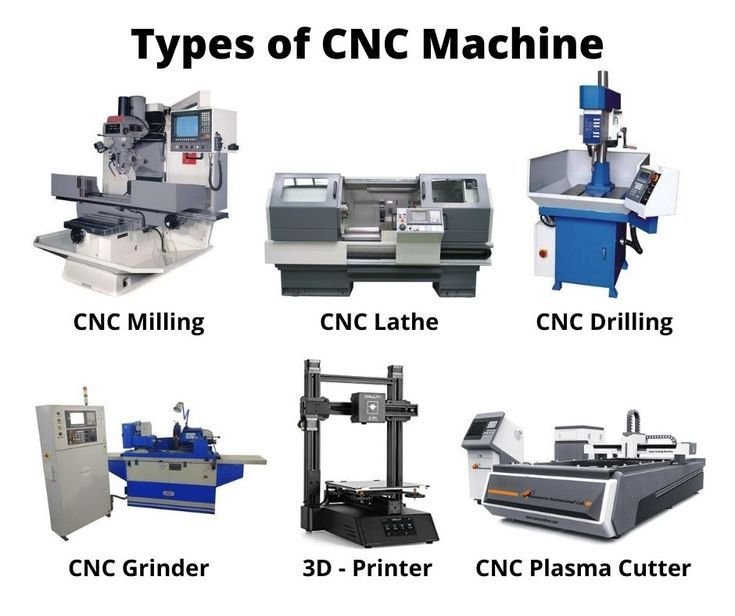
Modern CNC systems can perform multiple operations including:
- Milling
- Turning
- Drilling
- Tapping
- Boring
- Grinding
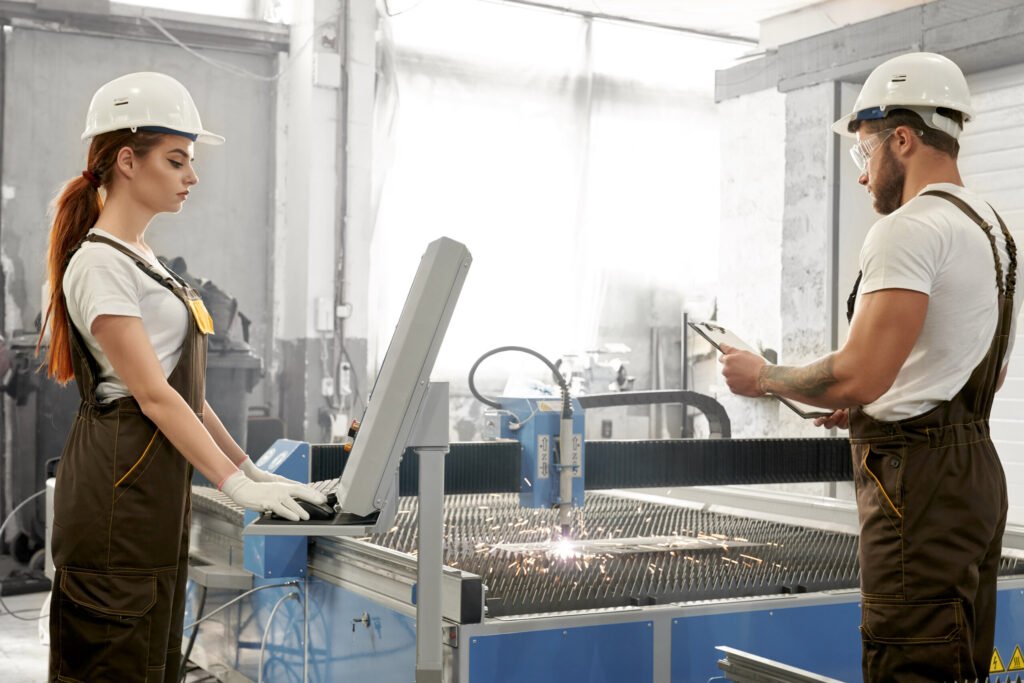
- Laser Cutting
- Engraving
- Wire Cut EDM
The integration of software and automation enables CNC machines to produce intricate geometries and highly detailed parts that would be difficult or impossible to achieve manually.
The Precision Advantage of CNC Machining
One of the most significant benefits of CNC technology is its exceptional precision.
Today’s advanced CNC machines can achieve tolerances measured in microns, allowing manufacturers to produce highly accurate components for demanding applications.
Superior Accuracy
CNC machining eliminates many of the inconsistencies associated with manual manufacturing processes. Computer-controlled movements ensure that every cut, hole, and contour follows exact specifications.
This level of precision is critical in industries such as aerospace, medical equipment manufacturing, semiconductor production, and automotive engineering, where even the smallest deviation can impact product performance.
Consistent Quality
Unlike traditional machining methods that rely heavily on operator skill, CNC machines follow the same programmed instructions repeatedly.
This ensures:
- Uniform product quality
- Repeatable production results
- Reduced variation between parts
- Improved customer satisfaction
Tighter Tolerances
Modern CNC machining enables manufacturers to achieve extremely tight tolerances while maintaining production efficiency.
These capabilities are particularly valuable for high-performance components that require exact dimensional accuracy.
Improving Manufacturing Efficiency
Beyond precision, CNC technology has dramatically improved manufacturing efficiency.
Faster Production Cycles
Automated CNC systems can operate continuously with minimal human intervention.
Once programmed, machines can perform repetitive tasks quickly and accurately, significantly reducing production times compared to manual machining methods.
Benefits include:
- Increased output
- Shorter lead times
- Faster project completion
- Improved production planning
Streamlining Complex Processes
Modern CNC systems can perform multiple machining operations within a single setup.
This reduces the need for manual repositioning, minimizing production bottlenecks while improving overall workflow efficiency.
Reduced Downtime
Advanced CNC machines incorporate predictive maintenance systems and real-time monitoring capabilities.
These technologies help manufacturers identify potential issues before failures occur, reducing downtime and improving operational reliability.
Minimizing Material Waste
Material efficiency has become increasingly important as manufacturers seek to reduce costs and support sustainability goals.
CNC machining contributes significantly to waste reduction by optimizing cutting paths and material usage.
Precision Material Utilization
Computer-controlled machining ensures that materials are used efficiently with minimal excess removal.
Benefits include:
- Lower raw material costs
- Reduced scrap generation
- Improved production yield
- Enhanced resource efficiency
Sustainable Manufacturing Practices
Reduced waste contributes to more environmentally responsible manufacturing operations.
As industries focus on sustainability and carbon reduction initiatives, CNC technology plays an important role in supporting greener manufacturing practices.
Cost Benefits of CNC Technology
While CNC equipment requires significant upfront investment, the long-term financial benefits are substantial.
Lower Labor Costs
Automation reduces the need for continuous manual operation.
One skilled operator can oversee multiple machines simultaneously, increasing productivity while lowering labor expenses.
Reduced Rework
The accuracy of CNC machining minimizes defects and production errors.
This reduces:
- Rejected parts
- Rework costs
- Material waste
- Production delays
Greater Production Efficiency
Higher throughput and consistent quality contribute to lower manufacturing costs per unit, particularly for medium- and high-volume production runs.
CNC Technology Across Industries
The versatility of CNC machining has made it an essential technology across multiple sectors.
Automotive Industry
Automotive manufacturers rely heavily on CNC machining for producing:
- Engine blocks
- Transmission components
- Brake systems
- Suspension parts
- Custom performance components
Precision machining ensures these components meet strict safety and performance standards.
Aerospace Industry
The aerospace sector demands exceptional precision and reliability.
CNC machining is used to manufacture:
- Aircraft structural components
- Turbine parts
- Landing gear components
- Aerospace fasteners
- Engine housings
The ability to work with high-strength alloys and maintain tight tolerances makes CNC machining indispensable in aerospace manufacturing.
Medical Device Manufacturing
Medical products require extremely high levels of precision and quality.
Applications include:
- Surgical instruments
- Orthopedic implants
- Medical equipment housings
- Dental components
- Diagnostic devices
CNC machining helps ensure patient safety through consistent manufacturing quality.
Electronics and Semiconductor Industry
The electronics sector utilizes CNC machining to produce:
- Equipment frames
- Semiconductor tooling
- Precision enclosures
- Cooling systems
- Automation components
These applications demand highly accurate machining and superior surface finishes.
Construction and Industrial Equipment
Heavy machinery manufacturers depend on CNC machining for:
- Structural components
- Hydraulic systems
- Machine frames
- Equipment housings
- Precision mechanical parts
Customization and Manufacturing Flexibility
Modern manufacturing increasingly demands customization and product variation.
CNC technology excels in supporting these requirements.
Rapid Prototyping
Manufacturers can quickly convert digital designs into physical prototypes.
This allows:
- Faster product development
- Design validation
- Performance testing
- Reduced time-to-market
Small Batch Production
Unlike traditional manufacturing methods that often require expensive tooling, CNC machining is ideal for low-volume production runs.
This flexibility allows businesses to produce customized components without significant setup costs.
Design Adaptability
Design changes can be implemented simply by modifying the digital program.
This enables manufacturers to respond quickly to customer requirements and market demands.
Integration with CAD and CAM Software
One of the major strengths of CNC technology is its seamless integration with digital design and manufacturing systems.
Computer-Aided Design (CAD)
CAD software enables engineers to create highly detailed 3D models and technical drawings.
Benefits include:
- Improved design accuracy
- Faster design modifications
- Enhanced collaboration
- Reduced development errors
Computer-Aided Manufacturing (CAM)
CAM software converts design data into machine instructions.
This integration helps:
- Optimize machining strategies
- Improve tool paths
- Reduce production errors
- Increase machining efficiency
Together, CAD and CAM technologies form the foundation of modern CNC manufacturing.

Industry 4.0 and Smart Manufacturing
The future of CNC machining is closely linked to Industry 4.0.
Artificial Intelligence
AI-powered systems can analyze machining data and optimize production processes automatically.
Benefits include:
- Improved efficiency
- Reduced downtime
- Better quality control
- Predictive maintenance
Industrial Internet of Things (IIoT)
Connected CNC machines can communicate with production systems in real time.
This allows manufacturers to:
- Monitor machine performance
- Track production metrics
- Improve operational visibility
- Enhance decision-making
Data Analytics
Advanced analytics help manufacturers identify opportunities for process improvement and cost reduction.
Sustainability and Environmental Benefits
Sustainability has become a key priority for manufacturers worldwide.
CNC technology supports environmentally responsible manufacturing through:
Reduced Waste
Precise machining minimizes excess material removal and scrap generation.
Energy Efficiency
Modern CNC machines are designed to consume less energy while maintaining high performance.
Resource Optimization
Advanced programming helps maximize material utilization and production efficiency.
These benefits contribute to lower environmental impact and support corporate sustainability goals.
How Lux Metal Supports Modern Manufacturing Through CNC Technology
As manufacturing technologies continue to evolve, businesses need reliable partners capable of delivering precision-engineered solutions.
At Lux Metal, we combine advanced manufacturing technologies with extensive industry experience to provide comprehensive metal fabrication and CNC machining services for customers across Malaysia and international markets.
Our goal is to help businesses improve efficiency, reduce production complexity, and achieve superior product quality.
CNC Machining Services
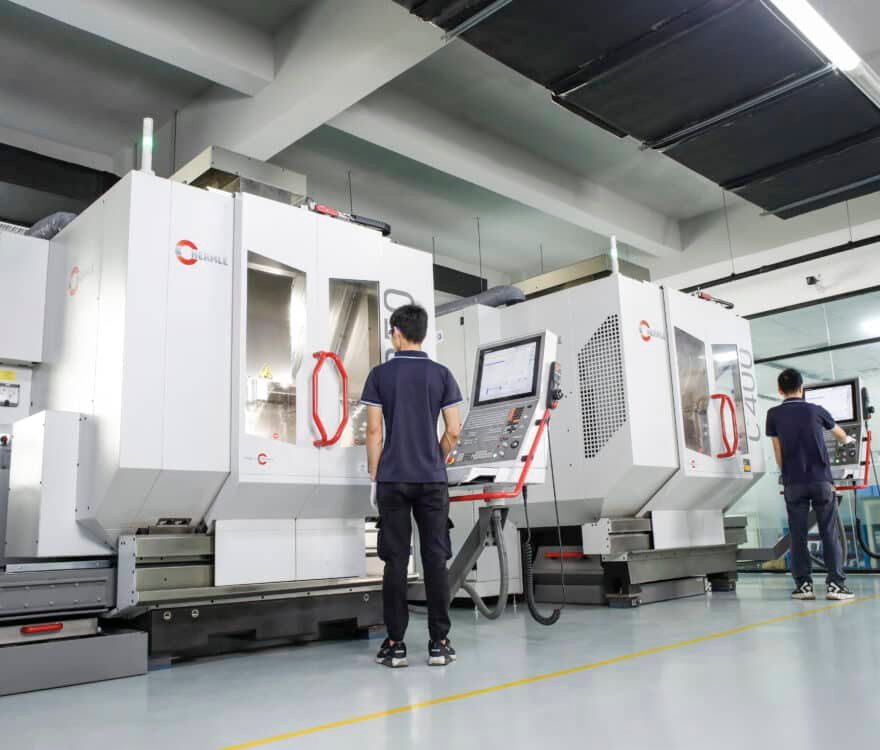
Lux Metal provides high-precision CNC machining solutions for a wide range of industrial applications.
Our capabilities include:
- CNC Milling
- CNC Turning
- Precision Machining
- Custom Component Manufacturing
- Engineering Part Fabrication
Using advanced CNC equipment, we manufacture components with tight tolerances and exceptional surface finishes that meet demanding industry requirements.
CNC Laser Cutting
Our CNC laser cutting technology delivers:
- High cutting precision
- Faster production speeds
- Reduced material waste
- Excellent edge quality
We process various materials including:
- Stainless Steel
- Mild Steel
- Aluminum
- Galvanized Steel
Learn more about our manufacturing capabilities at:
Sheet Metal Fabrication
Lux Metal offers complete sheet metal fabrication solutions from concept development to final production.
Our services include:
- Custom Metal Fabrication
- Sheet Metal Processing
- Industrial Enclosures
- Precision Components
- Fabricated Assemblies
Metal Bending and Forming
Our advanced bending equipment enables accurate forming of metal components for various industrial applications.
Capabilities include:
- CNC Bending
- Tube Bending
- Rolling
- Forming
Welding and Assembly Services
We provide:
- TIG Welding
- MIG Welding
- Robotic Welding
- Machine Assembly
- OEM Assembly Services
By integrating multiple manufacturing processes under one roof, Lux Metal helps customers streamline supply chains and reduce production lead times.
For more information about our services and facilities, visit:
🌐 https://luxmetalgroup.com/services/
🌐 https://luxmetalgroup.com/facilities/
Future Trends in CNC Machining
The future of CNC technology continues to evolve rapidly.
Emerging trends include:
- Artificial Intelligence integration
- Machine learning optimization
- Hybrid manufacturing systems
- Advanced robotics
- Smart factory implementation
- Digital twin technology
- Sustainable manufacturing initiatives
These innovations will further improve manufacturing precision, efficiency, and flexibility.
Conclusion
CNC technology has transformed manufacturing by delivering unprecedented levels of precision, efficiency, consistency, and versatility. From automotive and aerospace applications to medical devices and industrial equipment, CNC machining continues to play a critical role in modern production environments.
As Industry 4.0 technologies, automation systems, and smart manufacturing practices continue to advance, CNC machining will remain at the forefront of industrial innovation.
For manufacturers seeking to improve product quality, reduce costs, and remain competitive in an increasingly demanding market, investing in CNC technology is no longer optional—it is essential.
At Lux Metal, we remain committed to supporting the future of manufacturing through advanced CNC machining, precision engineering, and comprehensive metal fabrication solutions. By embracing innovation and continuously investing in modern technology, we help customers turn complex designs into high-quality products that meet the demands of today’s industries and tomorrow’s opportunities.
References
This article was prepared using information and insights from the following industry resources:
- HLH Prototypes – Precision CNC Machining
https://www.hlhprototypes.com/precision-cnc-machining/ - Zetwerk – The Role of CNC in Modern Steel Fabrication
https://www.zetwerk.com/en-us/resources/knowledge-base/miscellaneous/the-role-of-cnc-in-modern-steel-fabrication/ - SW Machine Tech – How CNC Technology is Revolutionizing Manufacturing
https://swmachinetech.com/how-cnc-technology-is-revolutionizing-manufacturing/ - Brandywine Valley Fabricators – The Power of CNC Machining Technology
https://brandywinevalleyfab.com/blog/the-power-of-cnc-machining-technology/ - Lux Metal Group – Precision Metal Fabrication & CNC Machining Solutions
https://luxmetalgroup.com/